Well Water Testing in Bloomsbury, NJ
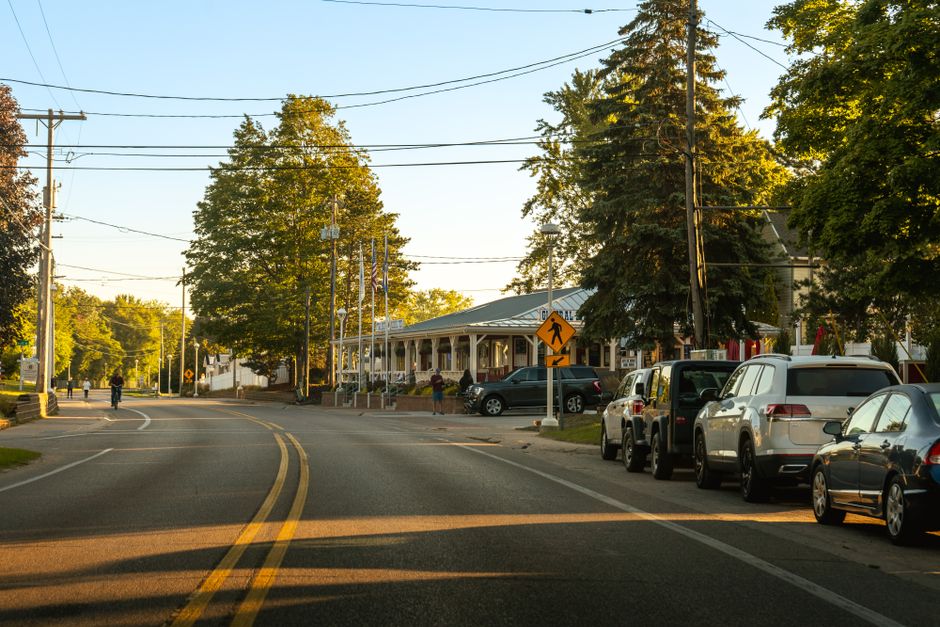
Bloomsbury is one of Hunterdon County's smallest boroughs, with fewer than 800 residents in under one square mile in the county's northwest corner, on the south bank of the Musconetcong River. It was carved out of Bethlehem Township and incorporated in 1905, and its name likely traces either to the Bloom family or to "blooms", masses of wrought iron processed from local iron ore. Water testing is the unusual part of the borough's story: the state has recorded so few private well tests here that it will not publish a summary at all.
What the state's data can and cannot say about Bloomsbury
NJDEP summarizes Private Well Testing Act results by municipality, but it suppresses any area with fewer than ten tested wells to protect privacy. Bloomsbury is in that group. Between September 2002 and December 2024, fewer than ten wells in the borough went through a sale or rental test that reached the state. In a county where Raritan Township alone logged 2,270 tests over the same period, fewer than ten is a strong sign that private wells are uncommon among the properties that change hands here.
It is not proof, and the numbers do not say anything about water quality. They say the sample is too small to characterize the borough. That is why this page leans on the geology and on the neighboring township rather than on borough-specific percentages.
The rock beneath Bloomsbury
Bloomsbury sits entirely in the Highlands province. The NJ Geological Survey's generalized map puts roughly 71% of the borough on Cambrian limestone and sandstone, 15% on Precambrian gneiss and granite, and 14% on Ordovician shale and limestone. The limestone-bearing rock is the difference from most of the township next door. Well results in Bethlehem Township, which is dominated by gneiss, show acidic water in 64.9% of wells and almost no arsenic (0.4%). Whether limestone-bearing ground here behaves the same way is exactly the kind of question a property-specific test answers, so do not assume a neighbor's result applies to your well.
Public water or a private well?
The 2017 NJDEP purveyor map shows part of the borough, about 17.1% by area, inside the mapped service area of Aqua New Jersey's Phillipsburg system. Combined with the very small number of recorded well tests, that suggests many Bloomsbury properties are connected to a public system, but a mapped service area is not a guarantee that every property is connected. Before you rely on either assumption, confirm with the seller, the borough, or the utility. The answer decides whether a PWTA test applies to the sale at all.
How to find out whether a Bloomsbury property is on a well
Because the records are thin, a little detective work pays off. Check for a monthly water or sewer bill from the borough or a utility, since a bill usually means a public connection. Look for a well cap, a pressure tank, or a treatment system in the basement or utility room. Ask the seller for any well record or driller's report, past test results, and details of installed equipment. If the answers conflict, the closing attorney or the lab can help settle the question before a test is ordered. It is a five-minute check that decides whether the legal requirement applies at all.
Buying or selling in Bloomsbury
The Private Well Testing Act applies only to properties served by a private well. If yours is, the same rules apply as anywhere in Hunterdon County: the test must be done by an NJDEP-certified laboratory or its authorized representative, both parties must receive and review the results before closing, and the contract decides who orders and pays.
- Establish the water source first. Ask for confirmation that the property is on public water, or for the well's location and any prior test reports.
- If it is a well, do not lean on the borough's history. There is almost no published local record to compare against, so your result will be the first real data point for that property.
- Allow time. With no local benchmark, an unexpected result can take extra days to sort out. Ask the lab for its turnaround when you schedule.
Renting out a property in Bloomsbury
Rental properties on a private well must be retested at least every five years, with a written copy to each tenant within 30 days of the results. Landlords with a connection to public water do not fall under the well-testing rule, so the same first question applies. See the landlord testing page.
How this compares with neighboring towns
Percent of tested wells above the limit for arsenic and gross alpha, or outside the optimum pH range, with the number of wells behind each figure:
- Bethlehem Township: arsenic 0.4%, pH 64.9%, gross alpha 3.1% (690 wells)
Questions from Bloomsbury homeowners
Why does the state show no data for my town?
Because fewer than ten wells were tested and reported. That is a privacy rule, not a sign that something is wrong.
Is limestone a concern for well water?
Different rock produces different water, and limestone-bearing ground can behave differently from the crystalline rock next door. The honest answer for any individual well is to test it. The overview of why wells differ explains the general picture.
Does the county's uranium requirement apply to a Bloomsbury well?
Yes, it is part of Hunterdon's standard panel. See why the county requires it.
If the house turns out to be on a well, what should I ask for?
Ask for any previous PWTA report, the well's age and depth if known, and a list of installed treatment equipment. An older well with no records is not a red flag by itself, but it means the fresh test carries more weight. Our buyer's guide covers the timeline.
Also nearby: Hampton, Glen Gardner and Lebanon Township.