Well Water Testing in East Amwell Township, NJ
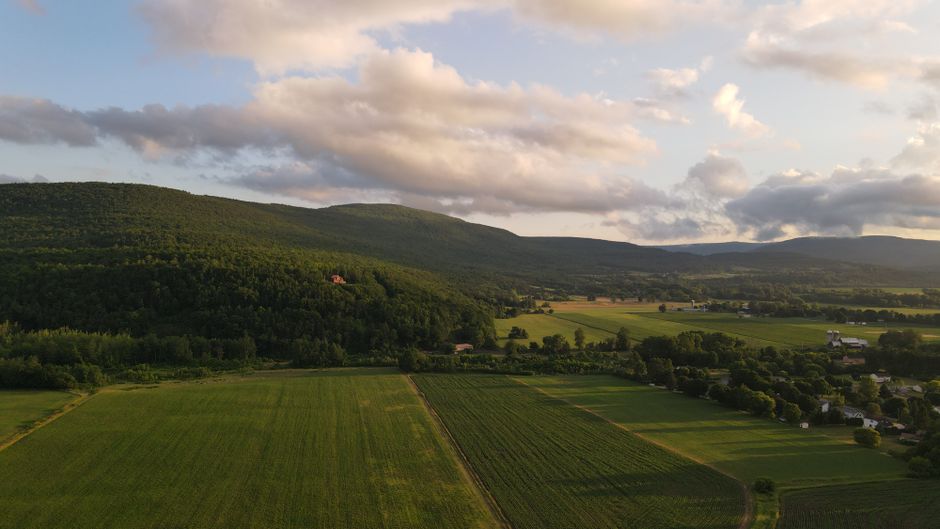
East Amwell Township sits in southeastern Hunterdon County, bordering both Somerset and Mercer counties within the Amwell and Raritan Valley region. It is the actual site of the 1932 Lindbergh kidnapping: the Lindbergh family estate where the abduction occurred is here, distinct from Flemington, the county seat where the resulting trial was later held. Just under 3,920 people live across roughly 28.5 square miles of mostly rural, low-density land, and almost none of it is on a public water system. What that means at a sale is that arsenic, more than anything else, sets the terms.
What well tests in East Amwell Township have found
NJDEP's Private Well Testing Act summary (September 2002 to December 2024) covers 616 untreated wells in the township.
- Arsenic: 42.5% of wells exceeded New Jersey's 5 µg/L limit. The county rate is 15.7%, so a well here is about two and a half times as likely to be flagged.
- PFAS: 10.7% of 84 wells tested since late 2021 exceeded a PFAS limit, about 9 of 84, against 4.4% countywide.
- Gross alpha and uranium: 6.9% of 562 wells for gross alpha, 0.7% of 148 for uranium.
- pH: 11.2%, low compared with the county's 28.1%.
- Iron and manganese: 10.6% and 8%, both below the county rates.
- Bacteria: total coliform in 26.1%, E. coli in 1.6%.
- Nitrate and solvents: 1.5% and 0.8%.
Put together, the record describes a township whose water is generally low in acid, iron and manganese but often high in arsenic, with a PFAS exceedance rate above the county's. It is a profile where the single most important number on a report is the arsenic figure. Ask a lab to explain that line first.
The rock beneath East Amwell
The NJ Geological Survey's generalized map puts about 86% of the township on Triassic sedimentary rock and 14% on Jurassic diabase. Research on the Newark Basin links naturally occurring arsenic to red mudstone and siltstone, and the well data here are consistent with that. Compare the Highlands town of Bethlehem Township, where only 0.4% of wells exceeded the arsenic limit.
Public water or a private well?
Only about 0.6% of the township falls inside any mapped public water service area on NJDEP's 2017 purveyor map. In practice that means a private well and, at a sale, a PWTA test. Flemington, a short distance away, is nearly all public water. The difference is dramatic: Flemington's record holds 16 tests, East Amwell's holds 616.
Buying or selling in East Amwell Township
With arsenic in roughly two of every five wells, a flagged result is closer to a coin flip than a rare event, and buyers and sellers do well to plan for it.
- Order the test early. Arsenic is the most likely reason a closing timeline slips, because treatment quotes and a confirmation retest take time.
- Treat the result as a number to negotiate. Treatment for arsenic is well established, so an elevated reading is typically a price and scope question, not a reason for a deal to fall apart. The treatment referral page explains the usual routes.
- Look at PFAS results carefully. The share of wells with a PFAS exceedance here is more than double the county rate, though the sample is smaller because PFAS has only been required since December 2021. The PFAS page covers wider screens.
Both parties must receive and review the results before closing, and the contract decides who pays. The PWTA page explains the panel.
Renting out a property in East Amwell Township
Landlords retest at least every five years and provide each tenant a copy within 30 days of receiving the results. Because arsenic is so common here, a landlord with a well that passed once should not assume it always will, and a retest is the only way to know. A test on file from before December 2021 will not include PFAS.
How this compares with neighboring towns
Percent of tested wells above the limit for arsenic and gross alpha, or outside the optimum pH range, with the number of wells behind each figure:
- Raritan Township: arsenic 22.2%, pH 7.2%, gross alpha 11.2% (2,269 wells)
- Delaware Township: arsenic 21.7%, pH 24%, gross alpha 11.7% (700 wells)
- West Amwell Township: arsenic 17.2%, pH 17.8%, gross alpha 16.6% (406 wells)
Questions from East Amwell homeowners
Is arsenic in well water dangerous?
Long-term exposure above the limit is a health concern, which is why New Jersey's limit is set at 5 µg/L, half the federal figure. Because it cannot be seen or tasted, testing is the only way to know.
Can arsenic be removed?
Yes. Treatment systems for arsenic are established, and the right choice depends on the concentration and the form of arsenic in the water. Ask for a written recommendation based on your actual result.
If I am not selling, should I test anyway?
Yes, at least once. The New Jersey Department of Health encourages every well owner to test once for arsenic, mercury, gross alpha and uranium, and every year for total coliform, nitrate and pH. With arsenic this common locally, an owner who has never tested has a real chance of finding out something useful. Arsenic cannot be seen, smelled or tasted.
Is the uranium requirement relevant here?
It applies, but uranium itself was rare in the local record. See why Hunterdon requires it.
Also nearby: Delaware Township, Raritan Township and West Amwell Township.