Well Water Testing in Lebanon, NJ
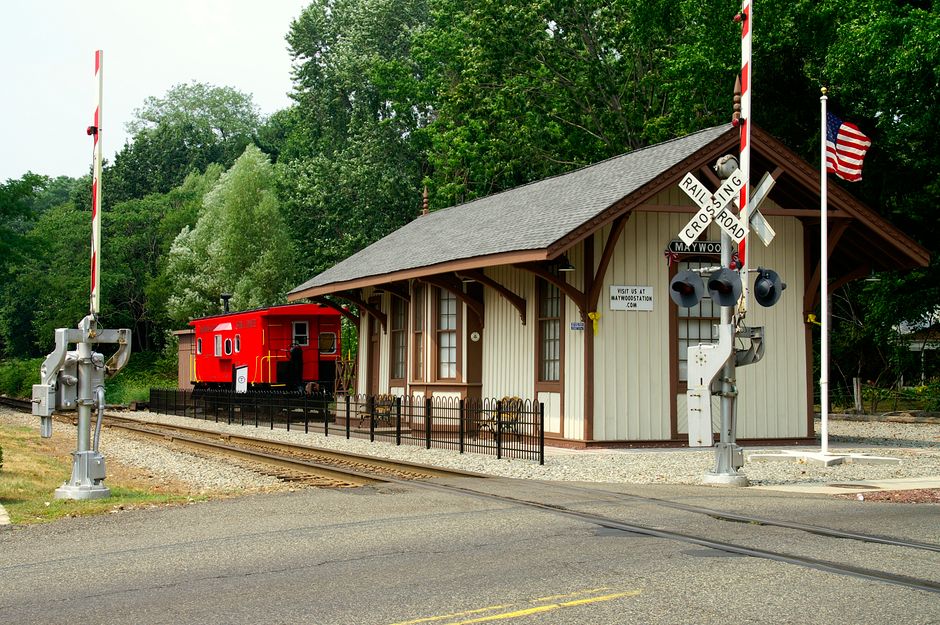
Lebanon Borough is completely surrounded by Clinton Township, making it one of New Jersey's "doughnut town" pairs, the same pattern seen with Flemington and Raritan Township elsewhere in the county. Originally known as Jacksonville, the borough grew up as a 19th-century station on the Central Railroad of New Jersey before adopting the Lebanon name. About 1,665 people live in under one square mile. The doughnut shape matters for water, because the borough sits inside a much larger township that is largely on wells, while the borough itself is mostly on a public system. The line between the two is where the questions arise.
Why there are no published numbers for Lebanon Borough
NJDEP does not release Private Well Testing Act summaries for municipalities with fewer than ten reported tests, so Lebanon Borough has none. Across September 2002 to December 2024 the state logged fewer than ten sale or rental well tests here, while the township around it, Clinton Township, logged 928. That imbalance is the best evidence available that wells are uncommon among the borough's transactions. It does not describe how any well in the borough tests.
Public water or a private well?
The state's 2017 purveyor map places about 78.3% of the borough inside the service area of Clinton WD, the same municipal system that serves the neighboring town of Clinton. The remainder is outside the mapped area, and a mapped area still does not prove every property is connected. The evidence at the house is simple: a monthly bill from the utility means public water, and a well cap, pressure tank or treatment equipment means a well. Public water means no PWTA test.
How the boundary works in practice
Because Lebanon Borough is entirely surrounded by Clinton Township, two neighbors can share a fence and have different water arrangements. One may pay a monthly bill to the Clinton water system and never think about a well, while the other, a few feet away in the township, has a well, a pressure tank and a PWTA report. For a buyer, the practical consequence is that a listing that says "Lebanon" tells you the taxing municipality, not the water source, and the borough's small size makes it easy to assume too much either way.
The rock beneath Lebanon Borough
The NJ Geological Survey's generalized bedrock map puts about 88% of the borough on Triassic siltstone, shale, sandstone and conglomerate, with the rest on Highlands gneiss and Jurassic diabase. That is the Newark Basin rock associated in the wider county with more arsenic and gross alpha. Surrounding Clinton Township, which straddles the same boundary, records 3.6% of wells above the arsenic limit and 7.7% above the gross alpha limit, and the highest uranium rate in Hunterdon at 2.5%. A borough well would draw on rock similar to its neighbor, but with no local record to compare, the fresh test is the only real evidence.
What the township next door suggests
Clinton Township's 928 tests are the closest thing to a local benchmark. They show arsenic in 3.6% of wells, a pH outside the optimum range in 40.3%, gross alpha in 7.7%, and uranium in 2.5% of 243 wells, which is the highest uranium rate in Hunterdon County. If a borough well draws on similar rock, the radiological lines are the ones to read most closely. But the township covers several kinds of bedrock and the borough sits mostly on one, so the comparison is a reason for attention, not a forecast.
Buying or selling in Lebanon Borough
A property on the borough system needs nothing under the PWTA. One on a well follows the county process.
- Confirm the source early, since it changes the timeline and the cost.
- On a well, dig up earlier test reports. With no local record to compare against, the property's own history is the best benchmark.
- Treat Clinton Township's numbers as background. Its record is large, but the borough's rock and wells are its own.
An NJDEP-certified laboratory or its authorized representative must do the work, the buyer and seller each receive the results before closing, and the contract sets who pays. See the PWTA page.
Renting out a property in Lebanon Borough
Rental properties on a private well must be retested at least every five years, and each tenant gets a written copy within 30 days of the results. Landlords on public water have no equivalent well-testing duty. See landlord testing.
How this compares with neighboring towns
Percent of tested wells above the limit for arsenic and gross alpha, or outside the optimum pH range, with the number of wells behind each figure:
- Clinton Township: arsenic 3.6%, pH 40.3%, gross alpha 7.7% (928 wells)
Questions from Lebanon Borough homeowners
Why is my borough blank on the state's maps?
Fewer than ten tests were on file, and the state hides any area that small. It says nothing about the water.
Does living inside a doughnut change the rules?
No. The same rules apply on both sides of the boundary. What differs is the water source, which is why the connection type matters more than the municipality.
If I am not selling, how often should I test?
The New Jersey Department of Health encourages well owners to test every year for total coliform, nitrate and pH, and at least once for arsenic, mercury, gross alpha and uranium. On public water, the utility does the testing and the results are public through NJ Water Check.
Is uranium tested on a borough well?
Yes, it is part of Hunterdon's standard panel. See why the county requires it.
Also nearby: Clinton.