Well Water Testing in Clinton, NJ
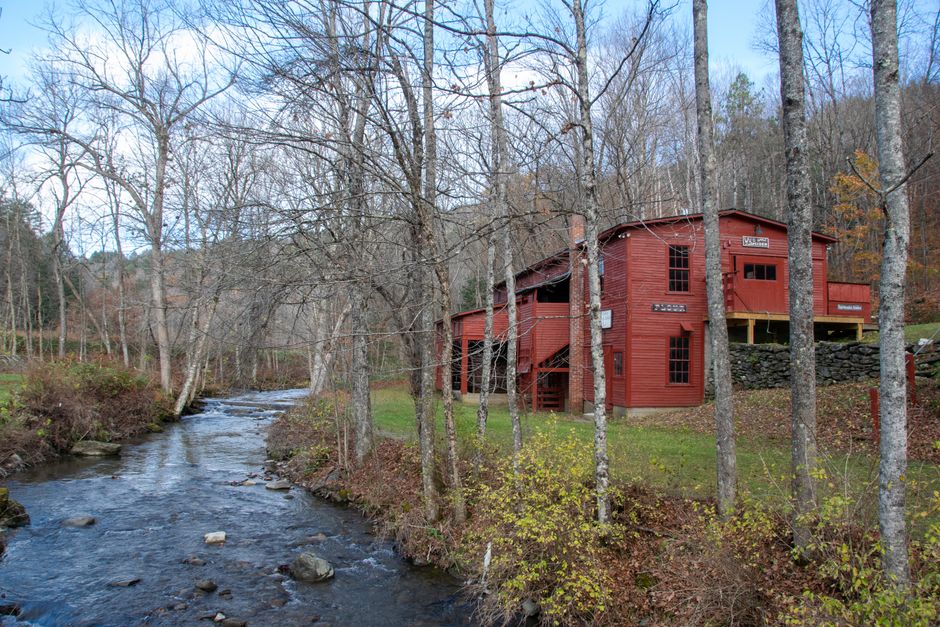
Clinton is a small, historic town of under 3,000 people on the South Branch of the Raritan River, best known for the Red Mill and the Stone Mill (now home to the Hunterdon Art Museum), two 19th-century mill buildings that anchor its National Register-listed historic district. It also has an unusual environmental testing history: in 1988 it was recognized for mitigating the worst residential radon-in-air hotspot then documented in the country. That is a different question from well water, since radon in air comes up through the ground into buildings, but it shows a community used to taking testing seriously. For well water, the more useful fact is that most of Clinton is on a public system.
What the state's data can and cannot say about Clinton
NJDEP summarizes Private Well Testing Act results by municipality but suppresses any area with fewer than ten tested wells. Clinton is one of those areas: between September 2002 and December 2024, fewer than ten wells in the town went through a sale or rental test that reached the state. Next door, Clinton Township recorded 928 tests over the same period. The contrast is a strong indication that private wells are uncommon among the properties that change hands in the town itself, though it says nothing directly about water quality.
Public water or a private well?
NJDEP's 2017 public water purveyor map shows about 79.7% of the town inside the mapped service area of Clinton's municipal system, listed by the state as Clinton WD. That leaves a fraction of properties, mostly at the edges, that may not be connected. A mapped service area is not proof that a given house is hooked up, so confirm the connection type for the specific address: a monthly water bill from the town is the easiest evidence, and a well cap, pressure tank or treatment equipment in the basement is the easiest sign of the opposite. If a property is on public water, no PWTA test is required for the sale. If it is on a well, everything below applies.
The rock beneath Clinton
Clinton sits where three kinds of rock meet. The NJ Geological Survey's generalized map puts roughly 36% of the town on Cambrian limestone and sandstone, 32% on Ordovician shale and limestone, and 31% on the Newark Basin's Triassic siltstone, shale and sandstone. That mix is unusual for Hunterdon. Nearby Clinton Township, which shares some of these rocks, shows 3.6% of wells above the arsenic limit and 7.7% above the gross alpha limit. Whether a Clinton well behaves like its township neighbors depends on which of the rocks it actually draws from, which is why a neighbor's number is a hint, not an answer.
Buying or selling a well-served home in Clinton
A home in the town on a private well is the exception, which makes documentation especially useful.
- Ask why the property is on a well. It may be at the edge of the service area, or a legacy well kept for irrigation. Either way, only a well serving the house triggers the PWTA test.
- Get any previous test reports. With so little local data, prior results for the property are the best benchmark.
- Confirm the whole panel is done. The county panel includes uranium, and a sale-triggered test must be done by an NJDEP-certified laboratory or its authorized representative.
Both parties must receive and review the results before closing. The law does not say who orders or pays, so that is settled in the contract. The PWTA testing page covers the panel, and the buyer's guide covers the timeline.
If your Clinton home is on public water
A public connection means there is no PWTA test, but it does not mean nothing is monitored. Community water systems test the water they deliver and publish an annual water quality report, and NJDEP's public NJ Water Check database lets you look up a system's results. Two things a buyer on public water may still want to check are the age of the plumbing inside the house, since lead and copper come from fixtures and pipes rather than from the source, and whether a separate well is still in use on the property for irrigation. A private test on the tap is optional and quick, but it is a choice, not a legal requirement.
Renting out a property in Clinton
Rentals on a private well need a retest at least every five years, with a written copy to each tenant within 30 days of the results. Landlords with public water have no equivalent well-testing obligation, which is another reason the connection type is worth confirming. See the landlord testing page.
How this compares with neighboring towns
Percent of tested wells above the limit for arsenic and gross alpha, or outside the optimum pH range, with the number of wells behind each figure:
- Clinton Township: arsenic 3.6%, pH 40.3%, gross alpha 7.7% (928 wells)
- Union Township: arsenic 6.5%, pH 43.9%, gross alpha 0.5% (616 wells)
- Franklin Township: arsenic 7.7%, pH 31.7%, gross alpha 5.1% (588 wells)
Questions from Clinton homeowners
Is the radon history relevant to my well?
Not directly. Radon in air and radon in water are separate issues, and the PWTA panel does not include radon. If you want to check, ask about expanded testing.
What if my well was drilled decades ago?
Age alone is not a problem, but an older well with no records makes the fresh test more important. Ask for whatever paperwork exists.
Why is the mix of rock different here from the rest of the county?
Clinton sits at the junction of the Highlands edge and the Newark Basin, which is why three rock types overlap in a small area. Our post on why wells differ explains the general picture.
Also nearby: Franklin Township, Union Township and Lebanon.