Well Water Testing in Lebanon Township, NJ
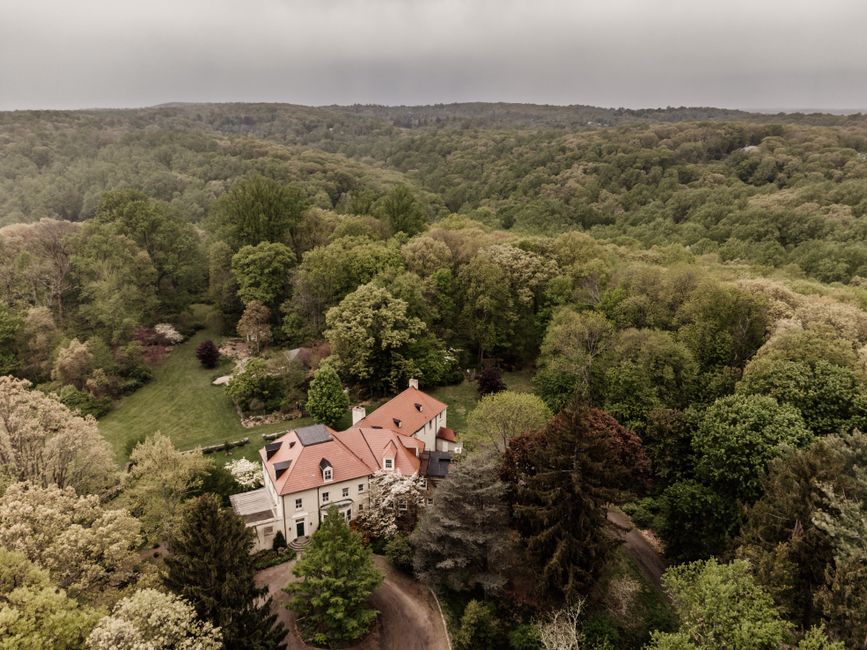
Lebanon Township sits in the northernmost part of Hunterdon County, bordering both Morris and Warren counties, on Highlands rock. It sits next to Tewksbury Township, where the magnitude 4.8 earthquake of April 2024 was centered, one of the stronger East Coast quakes in recent memory. About 6,200 people live across nearly 32 square miles, and with 1,084 tests since 2002, it is one of the county's busiest places for well testing, and one of the most consistent. Nearly all of it is on wells, and the water has a clear character.
What well tests in Lebanon Township have found
NJDEP's Private Well Testing Act summary (September 2002 to December 2024) covers 1,084 untreated wells, one of the largest samples in Hunterdon.
- pH: 54.4% of wells were outside the optimum range, about double the county's 28.1%.
- Iron: 23.7% exceeded the nuisance standard (county: 16%); manganese 10.1%.
- Arsenic: 0.6% exceeded the limit, close to none and far below the county's 15.7%.
- Bacteria: total coliform in 23.2%; E. coli in 3.4%.
- Radiological: gross alpha in 2.8% of 999 wells; uranium in 0.3% of 362.
- PFAS: 3.8% of 185 wells tested since late 2021 (county: 4.4%).
- Nitrate and solvents: 0.5% and 0.1%.
Because the record here is so large, the numbers are stable. Combining more than a thousand tests, the arsenic rate has stayed close to zero, the iron rate near a quarter, and the pH rate above half, so a buyer can treat these as the local baseline and read a report against them. PFAS is the exception, since it only entered the required panel in late 2021 and its sample is a fraction of the size, though even there 3.8% of 185 wells exceeded a limit, close to the county's 4.4%.
The rock beneath Lebanon Township
The NJ Geological Survey's generalized map puts about 90% of the township on Precambrian gneiss and granite, with most of the rest on Cambrian limestone and sandstone, all in the Highlands province. That is the source of the pattern: across Hunterdon's Highlands towns, about 58% of wells are outside the optimum pH range and 0.5% exceed the arsenic limit, against roughly 17% and 22% in the Newark Basin towns. Because the sample here is large, the numbers are stable enough to plan around.
Public water or a private well?
NJDEP's 2017 purveyor map shows only about 2.2% of the township inside a mapped service area, a small institutional system and a few pockets. In practice the answer is a private well, and a PWTA test accompanies nearly every sale. The township touches Califon, Glen Gardner and Hampton, where public systems cover much more of the land.
Buying or selling in Lebanon Township
With such a large record, the local pattern is dependable.
- Plan for a low-pH result. More than half of tested wells fall outside the optimum range, so a low reading should not surprise anyone. Ask about corrosion signs, such as blue-green staining and pinhole leaks, and whether a neutralizer is installed.
- Iron is common. Nearly a quarter of wells exceed the standard, so ask about staining and any softener or filter.
- Arsenic is unlikely, but the panel is the panel. A clean result is the norm, not a guarantee.
Both parties must receive and review the results before closing, and the contract decides who pays. See PWTA testing and the buyer's guide.
Renting out a property in Lebanon Township
Landlords on private wells retest at least every five years and give each tenant a copy within 30 days of receiving the results. In a township with acidic water, a landlord should read the pH line as closely as the health-based results. A test from before December 2021 will not include PFAS. See landlord testing.
How this compares with neighboring towns
Percent of tested wells above the limit for arsenic and gross alpha, or outside the optimum pH range, with the number of wells behind each figure:
- Tewksbury Township: arsenic 1.8%, pH 52.8%, gross alpha 2.5% (1,024 wells)
- Clinton Township: arsenic 3.6%, pH 40.3%, gross alpha 7.7% (928 wells)
- Bethlehem Township: arsenic 0.4%, pH 64.9%, gross alpha 3.1% (690 wells)
- Union Township: arsenic 6.5%, pH 43.9%, gross alpha 0.5% (616 wells)
Questions from Lebanon Township homeowners
Does the earthquake matter for my well?
Not for the test requirements. The April 2024 quake is part of the township's recent history and does not change what the PWTA panel checks. Anyone concerned about a well's physical condition after seismic activity should have the well and casing inspected by a licensed driller.
Is iron in the water a health problem?
At typical levels iron is an aesthetic issue: orange staining, a metallic taste, and buildup in fixtures. Nearly one in four Lebanon Township wells exceeds the standard, which is why softeners and filters are so common. The report shows your level.
Is low pH a health problem?
The concern is what acidic water can pull from plumbing, including lead and copper, which is why a low reading is often followed by a check at the tap. See how to read your test report.
If I am not selling, how often should I test?
The New Jersey Department of Health encourages well owners to test every year for total coliform, nitrate and pH, and at least once for arsenic, mercury, gross alpha and uranium. Since acidic water is the local norm, tracking the pH result over time is the useful habit.
Do I need uranium testing?
Yes, for a well; 0.3% of 362 local wells exceeded the limit. See why Hunterdon requires it.