Well Water Testing in Delaware Township, NJ
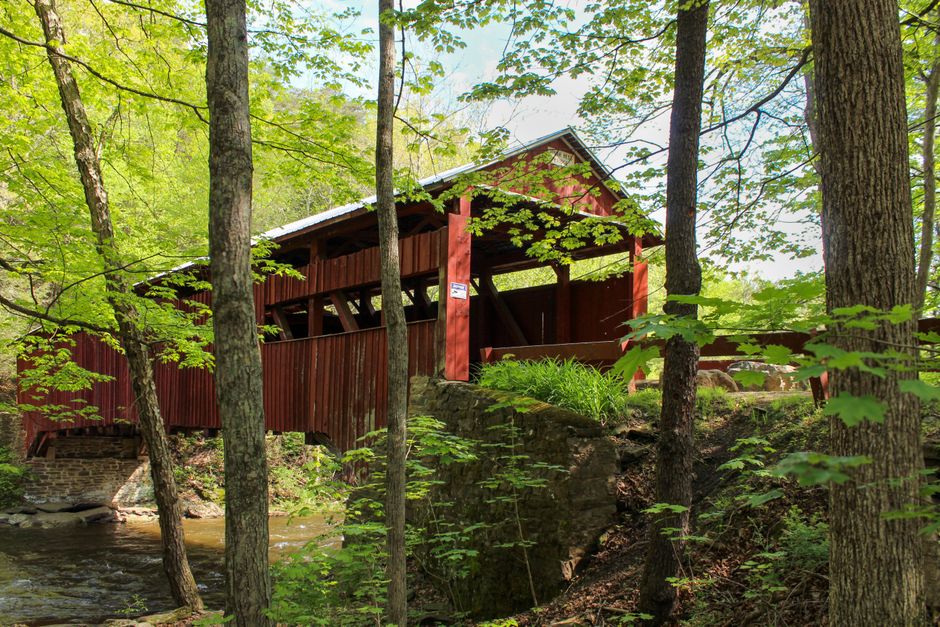
Delaware Township is home to Green Sergeant's Covered Bridge, New Jersey's only surviving historic covered bridge, spanning Wickecheoke Creek between the Sergeantsville and Rosemont sections. The township's roots run deep even by Hunterdon standards: Colonel John Reading, an early 18th-century settler here, was instrumental in establishing both Amwell Township in 1708 and Hunterdon County itself in 1714. About 4,560 people live across 37 square miles of rural, largely agricultural land. It is farm country, which leads many buyers to assume nitrate is the water problem. The state's test records say otherwise.
What well tests in Delaware Township have found
NJDEP's Private Well Testing Act summary (September 2002 to December 2024) covers 700 untreated wells in the township.
- Nitrate: 0.4% of wells exceeded the limit, roughly half the county's 0.8%. Despite the farmland, nitrate is not the local story.
- Arsenic: 21.7% exceeded the limit, against 15.7% countywide.
- Gross alpha: 11.7% of 640 wells exceeded the limit, about twice the county's 5.8%. Uranium itself was rare: 0.6% of 166.
- Manganese: 19.7% exceeded the nuisance standard, nearly double the county's 10.9%. Iron was 15.9%.
- Bacteria: total coliform in 22.4% of wells; E. coli in 3.9%.
- pH: 24% outside the optimum range (county: 28.1%).
- PFAS: 3.2% of 95 wells tested since late 2021.
The rock beneath Delaware Township
The NJ Geological Survey's generalized bedrock map puts about 97% of the township on Triassic siltstone, shale, sandstone and conglomerate, the sedimentary rock of the Newark Basin. Research on the Newark Basin ties elevated arsenic to its red mudstone and siltstone, and USGS work on the Passaic Formation identifies uranium as its dominant alpha emitter. That combination shows up here as arsenic near one in five wells and gross alpha above the county average. Uranium testing entered the panel later than the rest, so its sample is smaller than the other parameters, which is worth remembering when comparing uranium and gross alpha figures.
Public water or a private well?
Only a very small part of the township, about 2.4%, is inside a mapped public service area on NJDEP's 2017 purveyor map, including the Rosemont water company's. Everywhere else the water source is a private well, and a PWTA test accompanies nearly every sale. Neighboring Stockton on the Delaware River is one of the exceptions, with a public system covering much of the borough.
Buying or selling in Delaware Township
Sellers of rural properties often assume that a clean-looking, good-tasting well will pass. Local results say the risk lies in naturally occurring minerals that cannot be seen or tasted.
- Expect follow-up questions on radiological results. Gross alpha is flagged more often here than in most Hunterdon towns. An elevated result usually leads to a more specific analysis to identify the cause.
- Plan for arsenic and manganese together. They frequently show up in the same well, and treatment options for one do not always handle the other, so ask for quotes that address both.
- Do not skip the nitrate result because of the farms. It is usually low, but it is part of the panel and worth confirming, particularly near livestock or heavily fertilized fields.
Both parties must receive and review the results before closing, and the contract decides who pays. The PWTA page covers the panel; the treatment referral page covers what usually follows an elevated result.
Renting out a property in Delaware Township
Farmhouses, guest cottages and second dwellings on one well are common on township lots. Each rental property on a well needs a retest at least every five years, with a written copy to each tenant within 30 days of the result. If an older test on file has no PFAS result, that is because PFAS joined the panel in December 2021. See the landlord testing page.
How this compares with neighboring towns
Percent of tested wells above the limit for arsenic and gross alpha, or outside the optimum pH range, with the number of wells behind each figure:
- Raritan Township: arsenic 22.2%, pH 7.2%, gross alpha 11.2% (2,269 wells)
- Kingwood Township: arsenic 43%, pH 5.5%, gross alpha 13% (688 wells)
- East Amwell Township: arsenic 42.5%, pH 11.2%, gross alpha 6.9% (616 wells)
- West Amwell Township: arsenic 17.2%, pH 17.8%, gross alpha 16.6% (406 wells)
Questions from Delaware Township homeowners
Should I worry about nitrate on a farm property?
Test for it, but the local record is reassuring: fewer than one in 200 tested wells exceeded the limit. Wells close to livestock, septic systems or heavily fertilized fields are the ones worth watching.
Is a high manganese result a health problem?
At the levels common in local wells it is mostly a nuisance, causing staining and taste issues. The exception is very high concentrations, so read the number as well as the flag. See how to read your report.
If I am not selling, how often should I test?
The New Jersey Department of Health encourages well owners to test every year for total coliform, nitrate and pH, and at least once for arsenic, mercury, gross alpha and uranium. For a Delaware Township well, a one-time arsenic and gross alpha test tells you the most, since those are the results most likely to differ from the county norm.
How does Delaware compare with nearby towns?
Its results resemble East Amwell Township, Kingwood Township and West Amwell Township, which share the same rock, more than they resemble the Highlands towns to the north.
Also nearby: Raritan Township.