Well Water Testing in Califon, NJ
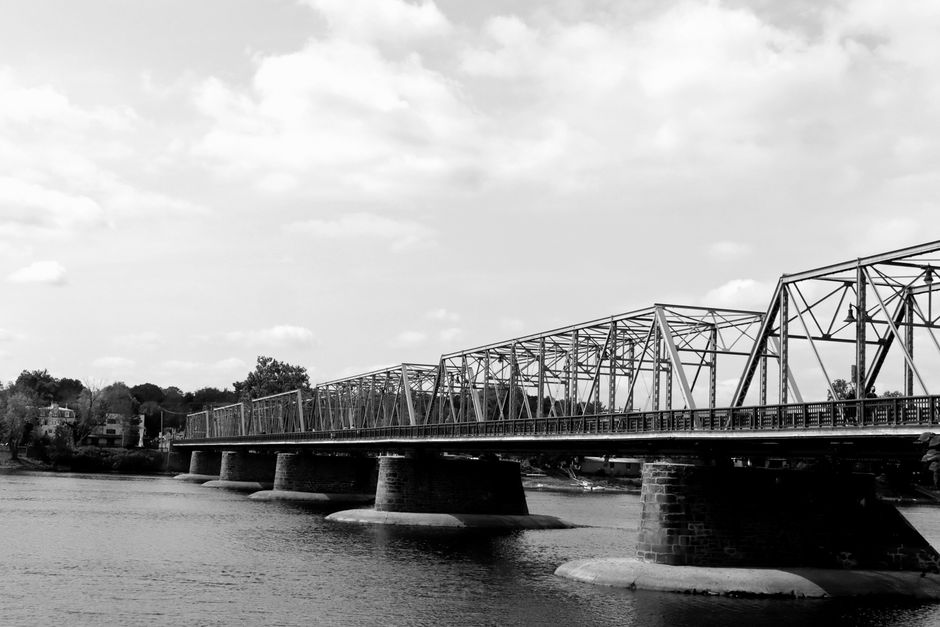
Califon is a small borough of just over 1,000 residents on the South Branch of the Raritan River, with a name local legend traces to the California Gold Rush era, supposedly the result of sign painters who could not fit "California" on a train station sign. Its historic iron bridge over the Raritan is often cited as the inspiration for the bridge scene in It's a Wonderful Life. For water testing, Califon is a small-sample place: NJDEP's records cover only 38 tested wells since 2002, which is enough to see patterns but not enough to treat any single percentage as settled.
What well tests in Califon have found
The state's Private Well Testing Act summary (September 2002 to December 2024) reports on 38 untreated Califon wells. Because the sample is small, the counts matter as much as the percentages, and they are shown here both ways.
- Bacteria: total coliform appeared in 40.5% of wells (15 of 37), well above the county's 23.1%. E. coli appeared in 5.4%, or 2 of 37.
- pH: 50% of wells, 19 of 38, fell outside the optimum range (county: 28.1%).
- Iron and manganese: 13.2% (5 of 38) exceeded the iron standard and 5.3% (2 of 38) the manganese standard.
- Arsenic: none of the 38 wells exceeded the limit.
- Radiological: none of 35 wells exceeded the gross alpha limit, and none of 13 the uranium limit.
- Nitrate and solvents: 1 of 38 wells exceeded the nitrate limit and 1 of 38 a solvent (VOC) limit.
Too few wells have been tested for PFAS to publish a Califon figure.
A note on reading these numbers: with 38 wells, a single well moves a percentage by about 2.6 points, so "0%" means none were found, not that none exist. The findings that hold up are the large gaps from the county figures, meaning the bacteria and pH rates, and the absence of arsenic, which matches the surrounding Highlands towns where the sample sizes are far bigger.
The rock beneath Califon
Califon lies entirely in the Highlands province. The NJ Geological Survey's generalized map puts about 57% of the borough on Precambrian gneiss and granite and 43% on Cambrian limestone and sandstone. The lack of arsenic and radiological hits and the high share of acidic wells fit the pattern across Hunterdon's Highlands towns, where arsenic exceedances are rare and low pH is common. The bacteria numbers are a different kind of finding: coliform depends on a well's construction, condition, and surroundings more than on bedrock, so a positive result is a maintenance signal, not a geological one.
Public water or a private well?
Califon is one of the boroughs where the answer varies by street. NJDEP's 2017 purveyor map shows roughly 56.5% of the borough inside the mapped service area of Aqua New Jersey's Califon system, which leaves a large remainder on private wells. The 38 wells tested since 2002 confirm that wells are still changing hands. Before a sale, confirm the connection type for the specific address rather than the borough as a whole.
Buying or selling in Califon
For a well-served home here, the number to watch is bacteria. A coliform-positive result does not always mean the water is unsafe, but it does mean the well needs attention, and an E. coli detection is more serious because it points to contamination from human or animal waste. Both are usually addressable, and the practical steps are:
- Ask for the well's history. Age of the casing and cap, any past disinfection, and the location of the septic system in relation to the well all matter.
- Plan for a possible retest. A positive bacteria result is commonly followed by disinfection and a second sample. Build time into the closing schedule and ask the lab about turnaround.
- Look at pH and plumbing together. With about half of local wells outside the pH range, ask whether copper pipes show blue-green staining, a common sign of corrosive water.
Both parties must receive and review the results before closing, and the PWTA testing page covers the full process. The treatment referral page explains what typically follows an elevated result.
Renting out a property in Califon
Landlords on a well must retest at least every five years and give each tenant a copy within 30 days of receiving the results. Because bacteria results can change with a well's condition, a routine retest is a useful check on maintenance, not just a legal formality. Any test done before December 2021 will not include PFAS. See landlord testing.
How this compares with neighboring towns
Percent of tested wells above the limit for arsenic and gross alpha, or outside the optimum pH range, with the number of wells behind each figure:
- Lebanon Township: arsenic 0.6%, pH 54.4%, gross alpha 2.8% (1,084 wells)
- Tewksbury Township: arsenic 1.8%, pH 52.8%, gross alpha 2.5% (1,024 wells)
Questions from Califon homeowners
Is a positive coliform result an emergency?
It is a reason to act, not to panic. It signals a pathway for bacteria into the well, and the usual response is disinfection followed by a retest. E. coli is the more serious of the two findings.
Why does Califon show no arsenic when other Hunterdon towns do?
Arsenic in this part of New Jersey is tied to red mudstone and siltstone in the Newark Basin, which is not what Califon sits on. For comparison, Delaware Township to the south has 21.7% of its wells above the limit.
Does the uranium requirement apply here?
Yes. It is part of the county panel; see why Hunterdon requires it.
Also nearby: Lebanon Township and Tewksbury Township.