Well Water Testing in High Bridge, NJ
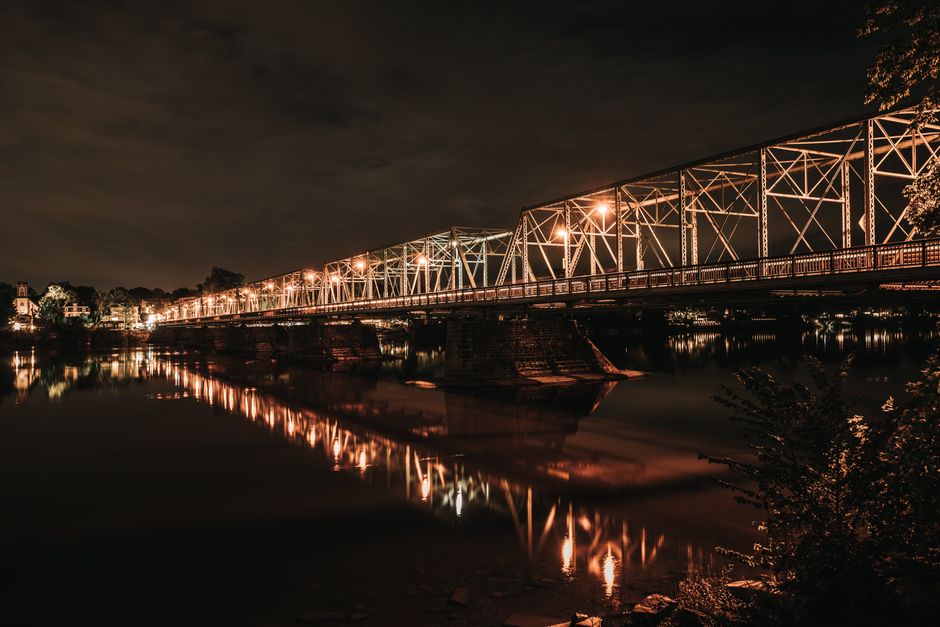
High Bridge grew up around ironworks established in the 1740s, an early industrial history that includes Revolutionary War supply and, later, the Taylor Iron and Steel Company. The borough takes its name from a 1,300-foot railroad bridge built by the Central Railroad Company in the 1860s, and it sits along the South Branch of the Raritan River. Roughly 3,550 people live in about 2.4 square miles, denser than most of the county, and about two-thirds of the borough is inside a mapped public water service area. The wells that remain have a recognizable character: hard on iron and manganese, and acidic.
What well tests in High Bridge have found
NJDEP's Private Well Testing Act summary (September 2002 to December 2024) covers 35 untreated wells. The sample is small, so counts are shown beside percentages.
- Iron: 28.6% of wells, 10 of 35, exceeded the iron standard, the highest rate in Hunterdon and well above the county's 16%.
- Manganese: 20%, or 7 of 35 wells, above the manganese standard (county: 10.9%).
- pH: 60% of wells, 21 of 35, outside the optimum range (county: 28.1%).
- Arsenic: none of 35 wells exceeded the limit.
- Bacteria: total coliform in 8 of 35 wells; no E. coli.
- Nitrate and radiological: none for nitrate; 1 of 35 wells above the gross alpha limit; none of 17 above the uranium limit.
- Solvents and PFAS: 1 of 35 wells above a solvent (VOC) limit, and none of 10 for PFAS.
What iron and manganese do to a house
Iron and manganese are secondary standards, meaning they are set for taste, staining and plumbing issues, not for direct health effects at the concentrations usually found. They still matter to a buyer. Iron leaves rust-colored stains on fixtures and laundry; manganese leaves dark brown or black staining and can clog pipes and fixtures over time. Water softeners, oxidizing filters and other systems exist for both, and a house that has them will often show the result in day-to-day performance, not on the report, since the PWTA sample comes from the untreated well.
The rock beneath High Bridge
The NJ Geological Survey's generalized map puts the entire borough, about 100%, on Precambrian gneiss and granite of the Highlands. That matches the arsenic-free, acidic profile of the Highlands towns: across Hunterdon's Highlands towns about 58% of wells fall outside the optimum pH range and 0.5% exceed the arsenic limit. Iron runs high there too, at about 24%, against roughly 14% in the Newark Basin towns.
Public water or a private well?
NJDEP's 2017 purveyor map shows about 65.6% of the borough inside the mapped service area of the High Bridge water system. The remaining third or so relies on wells, and 35 tests since 2002 show wells are still changing hands. A borough water bill is the quickest way to confirm which side of the line a specific property is on.
Buying or selling in High Bridge
For a well-served home, the likely surprises are staining and corrosion, not arsenic.
- Ask what treatment is already in place. Softeners, filters and neutralizers are common here, and their age and condition are worth knowing.
- Look at the plumbing. Acidic water and iron both act on pipes and fixtures.
- Read the pH line alongside iron. They often tell one story.
Both parties must receive and review the results before closing, and who orders and pays is negotiated. The PWTA page covers the panel, and the treatment referral page explains typical fixes.
Renting out a property in High Bridge
Landlords on a private well retest at least every five years and give each tenant a copy within 30 days. Because iron and manganese show up in tenant complaints, a landlord with a well here can expect the retest to explain some of them. Rentals on the borough system are not covered. Tests from before December 2021 carry no PFAS result. See landlord testing.
How this compares with neighboring towns
Percent of tested wells above the limit for arsenic and gross alpha, or outside the optimum pH range, with the number of wells behind each figure:
- Clinton Township: arsenic 3.6%, pH 40.3%, gross alpha 7.7% (928 wells)
Questions from High Bridge homeowners
Is iron in the water a health risk?
At typical levels it is mainly a nuisance, causing staining and a metallic taste, but only the test tells you your level. See how to read your report.
I am on the borough water. What does that mean for testing?
There is no PWTA requirement, and the utility tests what it delivers. NJDEP's NJ Water Check database publishes those results.
Can a water softener fix iron and manganese?
Softeners can remove some dissolved iron and manganese, but heavy loads usually need an oxidizing filter or a combination of equipment. The right choice depends on the concentrations found and on whether the iron is dissolved or already particulate, so ask for a recommendation based on your actual result. The treatment referral page explains how that usually goes.
If I am not selling, how often should I test?
The New Jersey Department of Health encourages well owners to test every year for total coliform, nitrate and pH, and at least once for arsenic, mercury, gross alpha and uranium. Iron and manganese are not on that list because they are aesthetic, but a yearly look is inexpensive and shows whether treatment is keeping up.
Do I need uranium testing?
For a well, yes. None of the 17 High Bridge wells exceeded the uranium limit, but the county panel applies regardless. See why Hunterdon requires it.
Also nearby: Clinton Township.