Well Water Testing in Milford, NJ
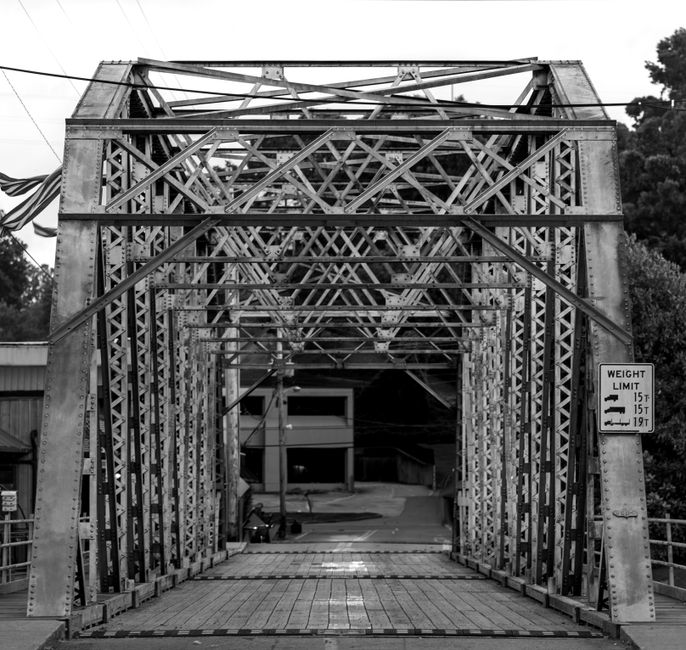
Milford sits on the Delaware River in western Hunterdon County, connected to Pennsylvania by the Upper Black Eddy-Milford Bridge, a 700-foot truss structure built in 1933. The settlement began as a mill town in the mid-1700s and was briefly known as "Lowreytown" after landowner Thomas Lowrey. About 1,230 people live in a little over one square mile. For water, Milford is defined by what is missing: NJDEP has recorded so few private well tests here that it will not publish results, and the borough has a public water system covering a large part of its land.
Why the state has no numbers for Milford
NJDEP publishes municipal summaries of Private Well Testing Act results, but it leaves out any municipality where fewer than ten wells were tested, to protect owners' privacy. Milford falls below that line: from September 2002 through December 2024, the state received fewer than ten sale or rental tests from the borough. Over the same period neighboring Holland Township logged 800. The gap suggests that few Milford properties sell or rent on a private well, but it reveals nothing about the water in the wells that do exist.
Public water or a private well?
The 2017 NJDEP map of public water service areas covers about 58.6% of the borough with the Milford water system, which appears in state records as Milford WD. The other 40% or so is unmapped. Some of it may be served in ways the map misses, since a mapped boundary describes where the utility delivers water and not which addresses are hooked up. Neither assumption is safe, so verify the address itself.
How to check your water source, step by step
A five-minute check settles the question before any test is ordered. First, look for a recurring water or sewer bill from the borough or a utility. Second, look in the basement or utility room for a well pressure tank, a well cap outside, or a treatment system, since these are the signs of a well. Third, ask the seller for any well record, driller's report or earlier test result. Fourth, if the answers conflict, the closing attorney or the borough can usually confirm the connection. Doing this early avoids ordering, or skipping, a test that the sale actually requires.
The rock beneath Milford
The NJ Geological Survey's generalized map puts essentially the whole borough, about 100%, on Triassic siltstone, shale, sandstone and conglomerate, the sedimentary rock of the Newark Basin. Across the twelve Hunterdon towns that sit almost entirely on that rock, about 22% of tested wells exceed New Jersey's arsenic limit and about 7% exceed gross alpha. That is the regional context, not a Milford finding, but it explains why the arsenic and radiological lines deserve attention if a Milford property does turn out to have a well.
Buying or selling in Milford
Public water means the PWTA has nothing to say about the sale. A private well means the full county panel, and the local numbers are thin enough that the sale should not lean on them.
- Pin down the water source before anything else. It settles whether a test is required at all.
- On a well, plan the calendar around the lab. Turnaround varies, and a follow-up test adds days.
- Use Holland Township for context only. Its results show arsenic in 9.3% of wells and a pH outside the optimum range in 35.1%, but a Milford well has its own depth and surroundings.
By law, an NJDEP-certified laboratory or its authorized representative does the sampling and analysis, the buyer and seller each get the results before closing, and the contract settles who pays. See the PWTA page.
Renting out a property in Milford
A landlord with a rental on a private well must retest at least every five years and hand each tenant a copy within 30 days of receiving the results. A rental on the borough system falls outside that rule. See landlord testing.
How this compares with neighboring towns
Percent of tested wells above the limit for arsenic and gross alpha, or outside the optimum pH range, with the number of wells behind each figure:
- Alexandria Township: arsenic 23.5%, pH 34.4%, gross alpha 1.5% (863 wells)
- Holland Township: arsenic 9.3%, pH 35.1%, gross alpha 3.2% (800 wells)
Questions from Milford homeowners
Does the missing data mean something is wrong?
No. Suppression is a privacy rule that applies whenever fewer than ten tests exist. It is not a warning.
If I am not selling, how often should I test?
The New Jersey Department of Health encourages well owners to test every year for total coliform, nitrate and pH, and at least once for arsenic, mercury, gross alpha and uranium. On public water the utility tests what it delivers, and NJDEP's NJ Water Check database publishes the results.
Can I see the results other Milford homeowners have gotten?
No. NJDEP releases Private Well Testing Act results only as summaries by county, municipality, census block group and 2-by-2-mile grid, without names, addresses or locations, and it withholds any area with fewer than ten tests. That protects privacy, and it is also why a property's own paperwork matters so much here.
Should I worry about being near the river?
The PWTA test does not change for river proximity. Flood-prone properties are a separate concern: floodwater can contaminate a well, and a test after a flood is worth doing even if a sale is not pending.
If the house has a well, is uranium part of the test?
It is, because every Hunterdon well test includes it. The background is in why Hunterdon requires uranium testing.
Also nearby: Alexandria Township.