Well Water Testing in Holland Township, NJ
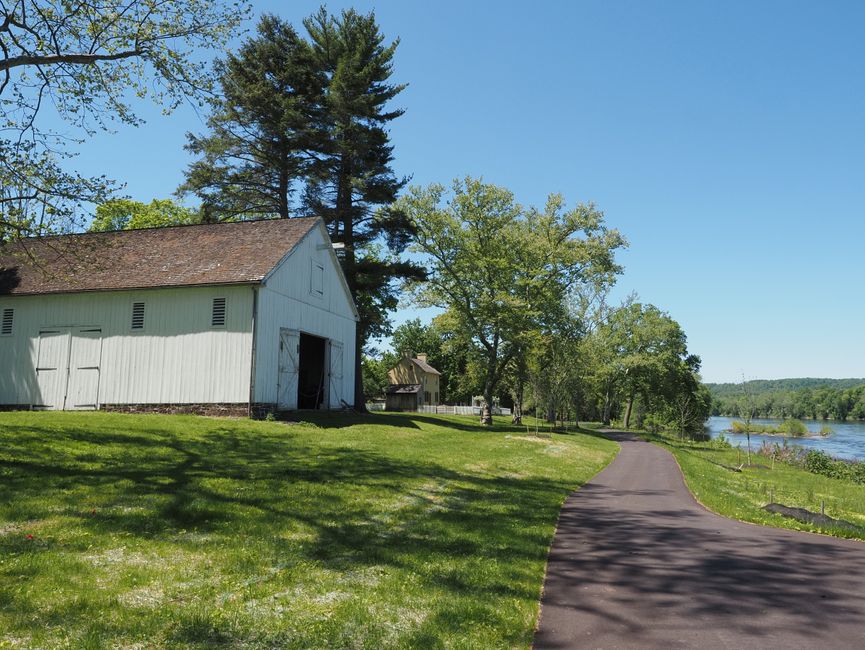
Holland Township sits in the northwest corner of Hunterdon County, with the Delaware River forming its border with Pennsylvania. Named by early Dutch settlers, the township has an unusually bumpy municipal history: created in 1874, dissolved and folded back into Alexandria Township in 1878, then reformed and separated again in 1879. Just over 5,170 people live across nearly 24 square miles of rural land, and its water record reflects a township that sits on two kinds of rock at once. Nearly all of it is on private wells.
What well tests in Holland Township have found
NJDEP's Private Well Testing Act summary (September 2002 to December 2024) covers 800 untreated wells.
- Arsenic: 9.3% exceeded the limit, between the county's 15.7% and the near-zero rate of pure Highlands towns.
- pH: 35.1% were outside the optimum range (county: 28.1%).
- Bacteria: total coliform in 26.5% of wells; E. coli in 4.1%.
- Iron and manganese: 16.6% and 7.1% above their standards, both close to the county rates.
- Radiological: gross alpha in 3.2% of 726 wells; none of 234 exceeded the uranium limit.
- Nitrate and solvents: 0.6% and 0.4%.
- PFAS: 2.9% of 103 wells tested since late 2021.
The pattern is one of intermediates: not as arsenic-heavy as the Newark Basin towns to the south, not as acidic as the Highlands towns to the east. Read as a whole, Holland's numbers do not point to one dominant problem, which means a report here can surprise in several directions at once. Arsenic, low pH and bacteria each appear in a meaningful minority of wells, and that is a reason to read the whole report, not just the first line.
The rock beneath Holland
The township straddles two provinces. The NJ Geological Survey's generalized map puts about 54% of it on the Newark Basin's Triassic sedimentary rock and 43% on Highlands gneiss and granite, with a small share of Cambrian limestone and sandstone. Both sets of behavior appear in the data. About 9% of wells exceed the arsenic limit, a fraction of the Newark Basin rate, and about a third fall outside the optimum pH range. Which half of the township a well is in is the best predictor of its result, and the overview of why wells differ explains the reasoning.
Public water or a private well?
Only about 2.4% of the township sits inside a mapped public water service area on NJDEP's 2017 purveyor map, a small pocket associated with Aqua New Jersey's Riegel Ridge system. Everywhere else the source is a private well, and the 800 tests since 2002 show that sales and rentals are steady. Neighboring Milford on the Delaware River is a contrast, with a public system covering much of the borough.
Buying or selling in Holland Township
Because the township is split, sellers and buyers are best served by assuming nothing.
- Find out which side of the geology the property sits on. A well near the river bluffs and one in the northeastern hills can produce different results.
- Expect a mixed report. Some combination of arsenic, acidity or bacteria is common, and none dominates.
- Ask for prior results and treatment details. They are the best benchmark for a specific well.
Both parties must receive and review the results before closing, and the contract decides who pays. See the PWTA page, and the buyer's guide for the timeline.
Renting out a property in Holland Township
Landlords on private wells retest at least every five years, with a copy to each tenant within 30 days of the results. Larger lots with a rental cottage or second dwelling on one well are common in a township of this size. A test from before December 2021 will not include PFAS. See landlord testing.
How this compares with neighboring towns
Percent of tested wells above the limit for arsenic and gross alpha, or outside the optimum pH range, with the number of wells behind each figure:
- Alexandria Township: arsenic 23.5%, pH 34.4%, gross alpha 1.5% (863 wells)
- Bethlehem Township: arsenic 0.4%, pH 64.9%, gross alpha 3.1% (690 wells)
Questions from Holland Township homeowners
Why are results so mixed here?
Because the township sits on two kinds of rock. Wells in the Newark Basin portion tend to see more arsenic, and wells in the Highlands portion tend to see more acidity.
Does living near the river change anything?
Proximity to the Delaware does not change the requirements. The rock the well draws from does, which is why the result is best confirmed with a test.
Is my well likely to have arsenic?
About one in eleven tested wells exceeded the limit, so it is a real possibility but not the likeliest result. The bigger lesson is that the range is wide, from none at all to well above the limit, and only your own result tells you where you fall.
If I am not selling, how often should I test?
The New Jersey Department of Health encourages well owners to test every year for total coliform, nitrate and pH, and at least once for arsenic, mercury, gross alpha and uranium. With bacteria found in about one well in four locally, an annual coliform test is the most practical habit.
Do I need uranium testing?
Yes, for a well; none of the 234 wells tested locally exceeded the limit. See why Hunterdon requires it.
Also nearby: Alexandria Township, Bethlehem Township and Milford.