Well Water Testing in Raritan Township, NJ
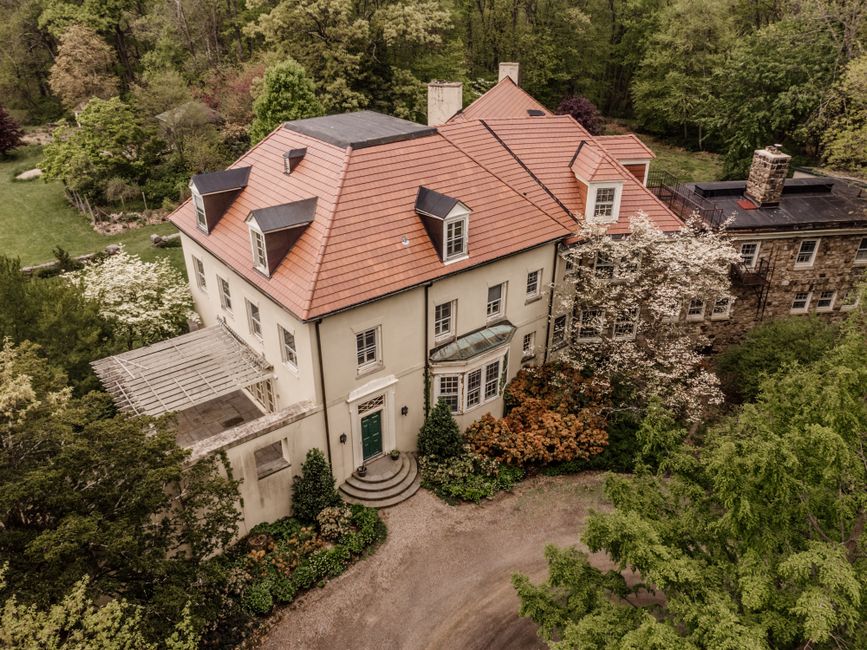
Raritan Township is Hunterdon County's largest municipality by population, with roughly 23,400 residents spread across nearly 38 square miles that completely surround the borough of Flemington. Named for the Raritan, a Lenape band that once inhabited the area, the township traces its roots to 1838 and even has a Revolutionary War skirmish on the books, the 1776 "Ambush of Geary". It also has the largest well-testing record in Hunterdon County: 2,269 tests since 2002, more than any other municipality. That makes it the best single guide to what a well on the Newark Basin's sedimentary rock produces.
What well tests in Raritan Township have found
NJDEP's Private Well Testing Act summary (September 2002 to December 2024) covers 2,269 untreated wells in the township.
- Arsenic: 22.2% exceeded New Jersey's 5 µg/L limit, against 15.7% for the county.
- Gross alpha: 11.2% of 2,028 wells exceeded the limit, about twice the county's 5.8%. Uranium itself was rare: 0.2% of 545.
- Manganese: 12.8% exceeded the nuisance standard (county: 10.9%); iron 11.1%.
- pH: only 7.2% were outside the optimum range, far below the county's 28.1%.
- Bacteria: total coliform in 19.8%; E. coli in 2.1%.
- Nitrate and solvents: 0.3% and 0.2%, both very low.
- PFAS: 5.6% of 287 wells tested since late 2021 (county: 4.4%).
Public water, private wells, and a map that does not tell the whole story
NJDEP's 2017 public water purveyor map shows about 99.8% of the township inside the mapped service area of NJ American Water's Raritan system. Yet the state has recorded 2,269 well tests here, the most in Hunterdon. Both are true. A mapped service area shows where the utility delivers water, not which individual homes are connected, and it does not capture properties that keep a well or never connected. So the map is a reason to check the address, not a reason to assume public water, and the well-test count is the reminder that plenty of wells remain. A recent water bill is the best evidence.
The rock beneath Raritan Township
The NJ Geological Survey's generalized map puts essentially the whole township, about 100%, on Triassic siltstone, shale, sandstone and conglomerate, the sedimentary rock of the Newark Basin. Research on the Newark Basin ties elevated arsenic to its red mudstone and siltstone, and USGS work on the Passaic Formation identifies uranium as its dominant alpha emitter. Across the twelve Hunterdon towns on this rock, about 22% of wells exceed the arsenic limit, and Raritan sits right on that average. Uranium testing entered the panel later than the rest, so its sample is smaller than the arsenic one.
Buying or selling in Raritan Township
For a well-served home, the numbers here are dependable enough to plan around.
- Expect arsenic to be the line that matters. About one well in five is flagged. It is common enough that an experienced seller will often have quotes ready.
- Watch gross alpha. Twice the county rate is still a minority, but an elevated result usually leads to more specific analysis, which adds time.
- Do not expect acidity. Low pH is rare here, so a plumbing corrosion story is less likely than a mineral story.
Both parties must receive and review the results before closing, and the contract decides who pays. See the PWTA page, the buyer's guide and the treatment referral page.
Renting out a property in Raritan Township
Landlords on private wells retest at least every five years and give each tenant a copy within 30 days of the result. In a township of this size, that includes many single-family rentals on well water. Rentals on the utility's system are not covered. A test from before December 2021 carries no PFAS result. See landlord testing.
How this compares with neighboring towns
Percent of tested wells above the limit for arsenic and gross alpha, or outside the optimum pH range, with the number of wells behind each figure:
- Readington Township: arsenic 19.1%, pH 11.2%, gross alpha 1.6% (2,067 wells)
- Clinton Township: arsenic 3.6%, pH 40.3%, gross alpha 7.7% (928 wells)
- Delaware Township: arsenic 21.7%, pH 24%, gross alpha 11.7% (700 wells)
- East Amwell Township: arsenic 42.5%, pH 11.2%, gross alpha 6.9% (616 wells)
Questions from Raritan Township homeowners
Is my street on public water?
Check the address, not the township. A recent water bill from the utility means public water. A well cap, a pressure tank or a treatment system in the basement means a well.
Why is arsenic so much higher here than in the northern part of the county?
Because of the rock. Arsenic in this part of New Jersey is tied to red mudstone and siltstone in the Newark Basin, while the Highlands to the north are crystalline rock with almost no arsenic. See why wells differ.
If I am not selling, how often should I test?
The New Jersey Department of Health encourages well owners to test every year for total coliform, nitrate and pH, and at least once for arsenic, mercury, gross alpha and uranium. In a township where arsenic is flagged in about one well in five, an owner who has never tested for it should do so once.
What about PFAS?
PFAS joined the required panel in December 2021, so the record is shorter: 5.6% of 287 Raritan wells exceeded a PFAS limit, slightly above the county's 4.4%. It is a minority result, but a real one in a township this large. A wider screen than the three required compounds is available; see PFAS testing.
Do I need uranium testing?
Yes, for a well; it is part of the county panel. See why Hunterdon requires it.