PWTA Well Water Testing in Hunterdon County, NJ
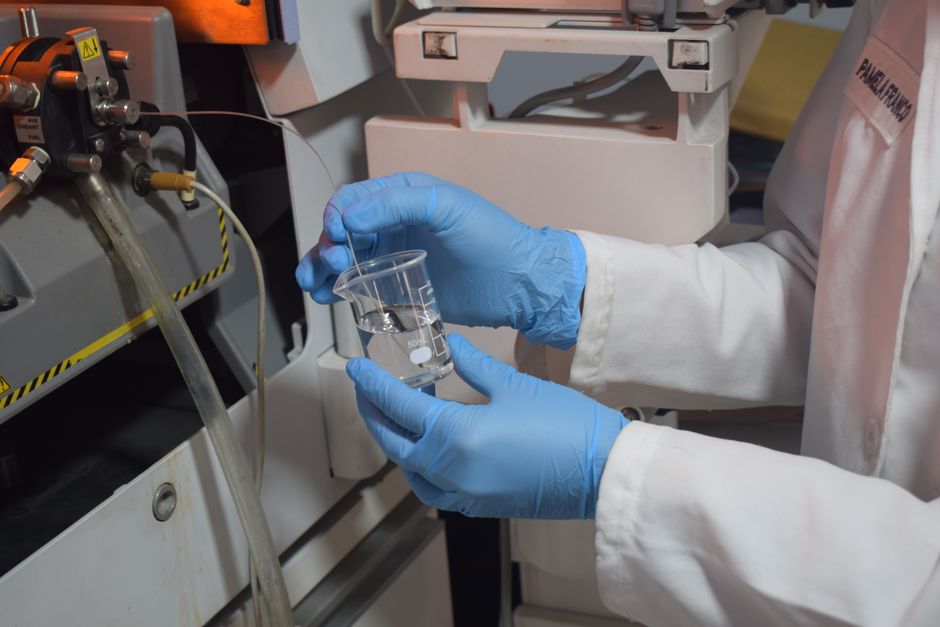
If you're buying or selling a home on a private well anywhere in Hunterdon County, New Jersey's Private Well Testing Act (PWTA) requires the well to be tested before the title can close — no exceptions, and no way around it. The law, formally N.J.S.A. 58:12A-26 et seq. and effective since September 14, 2002, applies to essentially every sale of a property served by a private well in the state, and it's enforced at the closing table: a title company or closing attorney will not let a well-served transaction proceed without both parties having received and reviewed the results.
This isn't a generic "nice to have" inspection like a radon test that either party can waive to speed things along — it's a statutory requirement tied directly to the transfer of title. We schedule PWTA testing that meets the full legal standard, coordinate around your closing date, and get you a report both the buyer and seller can actually understand and act on — not just a stack of numbers to hand off to an attorney and hope for the best. Call (908) 493-5028 or request a quote to get started.
What's tested: the full mandated panel (up to 43 parameters)
The PWTA panel is organized into five categories, and every certified test covers all of them — there's no partial or "basic" version that satisfies the legal requirement:
Microbiological
- Total coliform bacteria
- E. coli (tested as a follow-up if coliform is detected)
Inorganic chemicals
- pH
- Nitrate
- Iron
- Manganese
- Lead
- Arsenic
Radiological
- Gross alpha particle activity (required statewide)
- Uranium — required specifically in Hunterdon County and eleven others (Bergen, Essex, Hudson, Mercer, Middlesex, Morris, Passaic, Somerset, Sussex, Union, Warren), tied to naturally occurring uranium in the region's bedrock, most closely associated with the Highlands' granite and gneiss, and found above the limit in about 0.5% of Hunterdon wells tested. See our full explanation of why Hunterdon requires uranium testing.
Volatile Organic Compounds (VOCs)
- 26 specific compounds, including benzene, toluene, and vinyl chloride — industrial and fuel-related chemicals that can migrate into groundwater from a range of sources
Synthetic Organic Compounds (SOCs) and PFAS
- 3 SOCs, including 1,2,3-trichloropropane, ethylene dibromide (EDB), and DBCP
- PFOA, PFOS, and PFNA — the three PFAS ("forever chemical") compounds New Jersey has set its own enforceable limits for, ahead of federal action. See our PFAS deep-dive for more.
Why each category actually matters, not just what's on the list
Bacteria is the most time-sensitive category — a coliform or E. coli detection points to a pathway for surface contamination reaching your well (a cracked casing, a poor seal at the wellhead) and typically needs the fastest follow-up of anything on the panel.
The inorganic metals and minerals — arsenic, iron, manganese, lead — are mostly a story about what's naturally present in this region's rock and soil rather than pollution someone caused. Arsenic in particular is common enough in parts of Hunterdon's geology that New Jersey set its own drinking water standard for it, stricter than the federal limit.
The radiological parameters, gross alpha and uranium, exist because groundwater moving through fractured bedrock — the granite and gneiss under Hunterdon's Highlands region, or the sedimentary rock of the Newark Basin farther south — can pick up trace radioactive material over time. It's a slow, cumulative exposure concern, not an acute one, which is exactly the kind of risk a one-time visual or taste check would never catch. In Hunterdon's test record, gross alpha exceeded its limit in 5.8% of wells and uranium in 0.5%, so both are worth checking but neither is the most common finding; that distinction belongs to arsenic (15.7%), pH outside the optimum range (28.1%), and coliform bacteria (23.1%).
VOCs, SOCs, and PFAS are the categories most likely to trace back to a specific external source — fuel storage, industrial use, or firefighting foam, for instance — rather than the ground itself. Most rural Hunterdon wells come back clean here, but "most" is exactly why testing every property, not just ones near an obvious risk, is the standard.
How the process works, start to finish
- Schedule — call or request a quote; we can coordinate with your realtor or closing attorney on timing, and it helps to tell us early if your closing date is tight.
- Sample collection — an NJDEP-certified laboratory or its authorized representative visits the property and draws the sample from an interior tap, following NJDEP protocol. You don't need to shut off your water, empty cabinets, or prepare anything special in advance — the visit is typically brief.
- Lab analysis — the sample goes to an NJDEP-certified laboratory, where each parameter category runs through its own testing method (some require different collection containers and preservation methods, which is why a certified sampler handling this correctly matters).
- Report delivery — the lab report goes to you and the other party in the transaction (and, with your authorization, to your realtor and closing attorney), satisfying the legal review requirement before title can transfer.
For the full walkthrough of what actually happens during the visit itself, see What to Expect on Well Water Testing Day.
Who orders it, who pays, and who has to see the results
Either the buyer or the seller can order the test, and payment is negotiable between the parties in the purchase contract — New Jersey law doesn't fix which side pays. What the law does fix is that both parties must receive and review the results before closing, regardless of who ordered or paid for the test. If you're navigating this as a buyer for the first time, our step-by-step buyer's guide walks through the entire transaction timeline.
Turnaround time
Turnaround varies by laboratory and by panel, and certain VOC/SOC subsets can take longer depending on the lab's queue — ask for the lab's current turnaround when you schedule so it doesn't catch your closing date off guard. If your timeline is especially tight, tell us when you schedule so it can be planned around.
If something comes back elevated
A result outside the acceptable range doesn't automatically kill a sale, and for most of the parameters that show up in this region — naturally occurring iron, manganese and arsenic, and occasionally elevated nitrate — there's a well-established treatment path. What matters is understanding exactly which parameter exceeded and by how much, then getting connected to the right fix rather than guessing. See our Water Treatment Referral & Consultation page for what typically happens next, and How to Read Your Test Report for making sense of the numbers themselves.
Landlords: this is different from your ongoing requirement
If you're testing because you're renting out (not selling) a well-served property, note that PWTA testing at a sale is a one-time event — landlords face a separate, recurring 5-year retesting obligation for as long as the property stays rented. See Landlord & Rental Well Testing for that requirement specifically.
Related reading
Closing date approaching? Call (908) 493-5028 — tell us your closing date.