Well Water Testing in Tewksbury Township, NJ
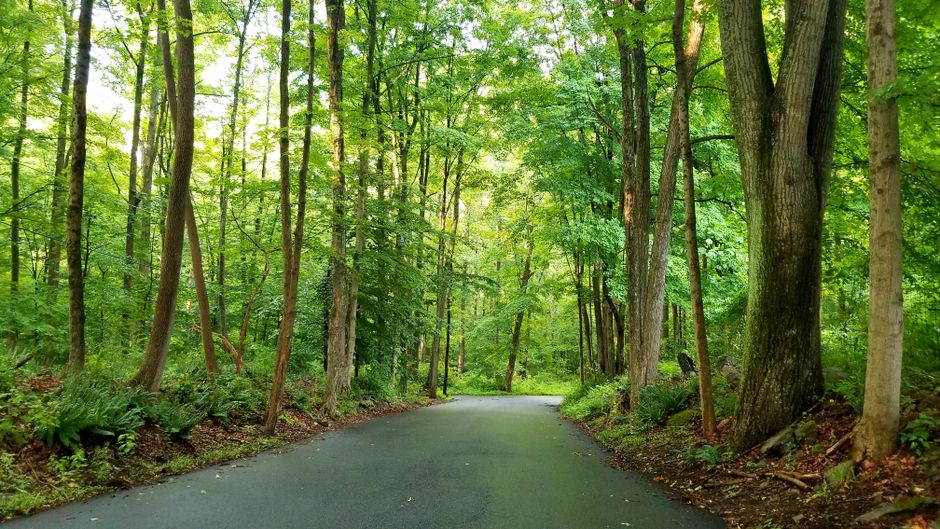
Tewksbury Township, named for Tewkesbury, England, with which it formed a sister-city relationship in 2003, was settled by Europeans starting in 1708 after George Willocks acquired land from the Lenape. More recently, the township made regional news as the confirmed epicenter, near the Oldwick section, of the magnitude 4.8 earthquake that struck New Jersey on April 5, 2024, one of the strongest East Coast quakes in decades, per USGS. About 5,870 people live across nearly 32 square miles, almost all on private wells. Its water record, 1,024 tests since 2002, describes some of the cleanest bacterial results in Hunterdon, alongside acidic water.
What well tests in Tewksbury Township have found
NJDEP's Private Well Testing Act summary (September 2002 to December 2024) covers 1,024 untreated wells.
- pH: 52.8% of wells were outside the optimum range, nearly double the county's 28.1%.
- Iron: 21.2% exceeded the nuisance standard (county: 16%); manganese 10.4%.
- Bacteria: total coliform in 17.8% and E. coli in 1.1%, the lowest rates among Hunterdon's larger townships.
- Arsenic: 1.8% exceeded the limit, far below the county's 15.7%.
- Radiological: gross alpha in 2.5% of 945 wells; uranium in 1.2% of 323, above the county's 0.5% but still a small minority.
- PFAS: 5.8% of 139 wells tested since late 2021 (county: 4.4%).
- Nitrate and solvents: 1.3% and none.
The rock beneath Tewksbury
Tewksbury straddles two provinces. The NJ Geological Survey's generalized map puts about 65% of the township on Precambrian gneiss and granite of the Highlands and about 33% on the Newark Basin's Triassic sedimentary rock. The results lean strongly to the Highlands side: acidic water and very little arsenic, matching the pattern of Hunterdon's Highlands towns, where about 58% of wells fall outside the optimum pH range and 0.5% exceed the arsenic limit. The uranium rate here is the second highest in the county, which may reflect the Newark Basin rock in the township's southern portion.
What a thousand tests tell a buyer
A record this size is unusual in a township of this population, and it changes how to read a single result. When more than 1,024 wells have been tested, the local baseline is dependable: low pH is expected, iron is common, and arsenic and bacteria are less likely than in most of the county. A result that fits the baseline is unremarkable. A result that departs from it, such as an arsenic reading well above the county rate or a bacteria detection in a well on the township's cleaner side of the record, is the one worth investigating further, since it points to something specific to that property, not the ground in general.
Public water or a private well?
NJDEP's 2017 purveyor map shows only about 4.6% of the township inside a mapped public water service area, a few small pockets, including parts of systems whose main service areas lie in neighboring counties. In practice the answer is a private well, and a PWTA test accompanies nearly every sale. Califon is the nearest borough with much more public water.
Buying or selling in Tewksbury Township
The local record is large, and the pattern is stable.
- Expect low pH. About half of tested wells fall outside the optimum range, so ask about blue-green staining, pinhole leaks and any neutralizer.
- Expect iron. About one well in five exceeds the standard, so ask about softeners and filters.
- Bacteria and arsenic are less likely. But the panel still requires both, and results vary well to well.
Both parties must receive and review the results before closing, and the contract decides who pays. See the PWTA page and the treatment referral page.
Renting out a property in Tewksbury Township
Landlords on private wells retest at least every five years and give each tenant a copy within 30 days of the result. A retest is also a chance to check for corrosion signs in acidic-water areas. A test from before December 2021 will not include PFAS. See landlord testing.
How this compares with neighboring towns
Percent of tested wells above the limit for arsenic and gross alpha, or outside the optimum pH range, with the number of wells behind each figure:
- Readington Township: arsenic 19.1%, pH 11.2%, gross alpha 1.6% (2,067 wells)
- Lebanon Township: arsenic 0.6%, pH 54.4%, gross alpha 2.8% (1,084 wells)
- Clinton Township: arsenic 3.6%, pH 40.3%, gross alpha 7.7% (928 wells)
- Califon Borough: arsenic 0%, pH 50%, gross alpha 0% (38 wells)
Questions from Tewksbury homeowners
Did the 2024 earthquake affect wells?
The quake does not change what the PWTA panel checks. If you noticed changes in water clarity or flow afterward, a well inspection by a licensed driller and a fresh water test are reasonable steps, whether or not a sale is pending.
Is low pH dangerous?
The acidity is mostly a plumbing concern: acidic water can pull lead and copper from pipes. See how to read your test report.
If I am not selling, how often should I test?
The New Jersey Department of Health encourages well owners to test every year for total coliform, nitrate and pH, and at least once for arsenic, mercury, gross alpha and uranium. Since acidic water is the local norm, tracking pH over time is the useful habit.
Is iron in the water a health problem?
At typical levels it is an aesthetic issue: orange staining, a metallic taste and buildup in fixtures. About one Tewksbury well in five exceeds the standard, so softeners and filters are common. The report shows your level.
Do I need uranium testing?
Yes, for a well; 1.2% of 323 local wells exceeded the limit. See why Hunterdon requires it.